

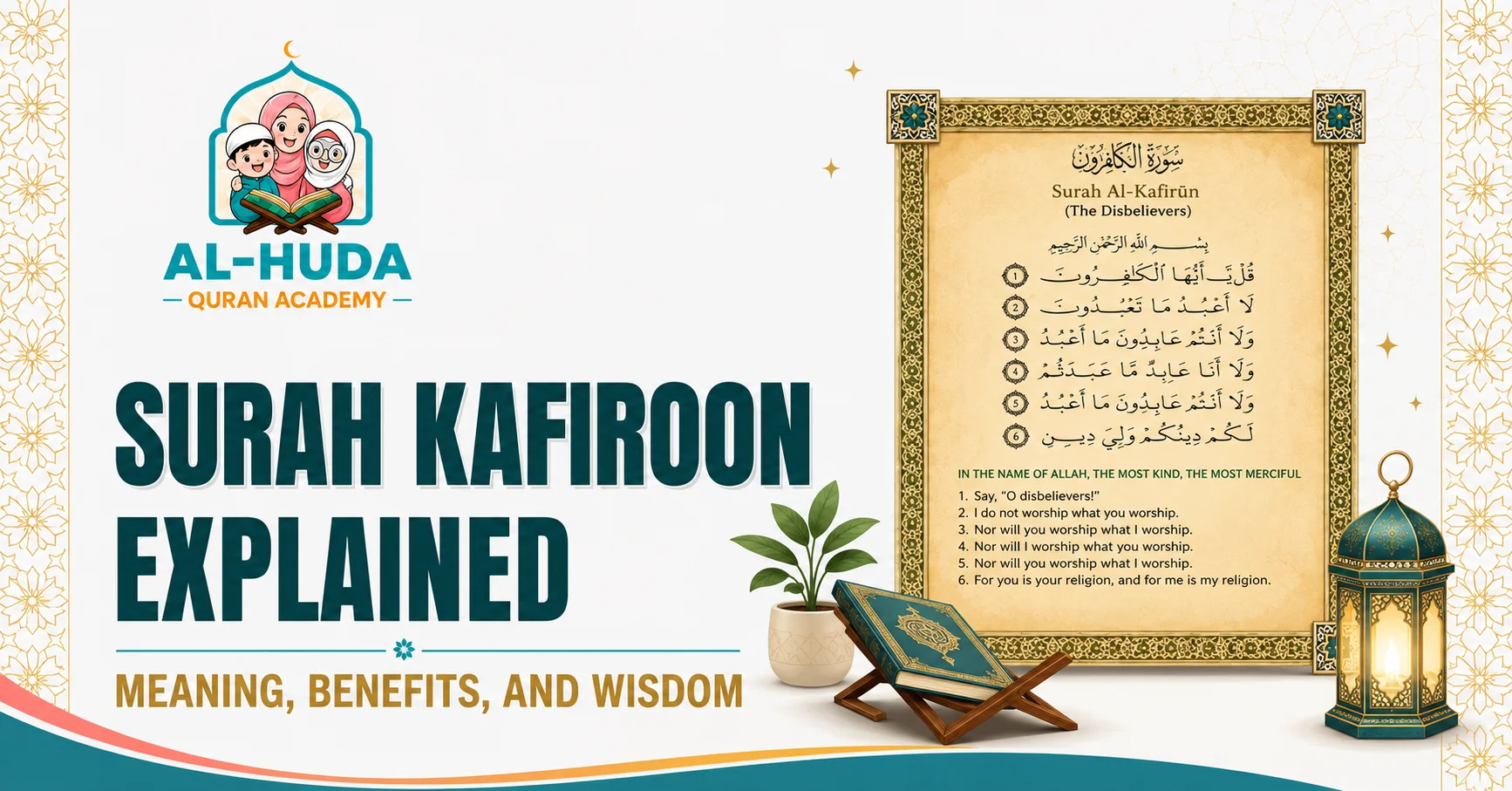
Have you ever wondered why some chapters of the Quran feel so concise yet so powerful? Surah Kafiroon is one of those short but profoundly meaningful chapters. Found in the 109th position of the Quran, it carries a simple yet strong message about faith, identity, and the boundaries between belief and disbelief. This surah is often recited in prayers and serves as a reminder of the importance of unwavering devotion to Allah.
What is Surah Kafiroon?
Surah Kafiroon is a Makki surah, meaning it was revealed in Makkah. With only six verses, it might seem brief, but don’t let its length fool you. Every word holds immense wisdom. The surah emphasizes rejecting compromise in matters of faith, especially when faced with disbelievers or societal pressures that challenge your belief in Allah. It’s a declaration of devotion and an affirmation that a true believer stays firm in their monotheism.
Place in the Quran and Historical Background
This surah was revealed during a time when Prophet Muhammad (PBUH) faced intense opposition from the Quraysh tribe. The leaders of Quraysh wanted him to mix their idol worship with his teachings, perhaps as a way to avoid conflict. But this surah is his clear answer: a respectful but firm rejection of idolatry and compromise. It reminds us that staying true to faith sometimes requires courage and clarity.
Detailed Meaning of Surah Kafiroon
Let’s break down Surah Kafiroon verse by verse, so we can understand its depth.
Verse 1–2: Rejecting Idolatry
“Say, ‘O disbelievers! I do not worship what you worship, nor do you worship what I worship.’”
This opening sets the tone. It’s a polite but firm statement. The Prophet (PBUH) is instructed to declare the difference between the worshippers of Allah and idolaters. The message is clear: faith cannot be compromised. In life, this can be applied to situations where your values or ethics are challenged—you must stand your ground respectfully.
Verse 3–4: Maintaining Religious Integrity
“Nor will I ever worship what you worship, nor will you ever worship what I worship.”
Here, repetition reinforces the principle. By repeating the declaration, the surah teaches us that consistency in faith is key. You can’t pick and choose your devotion based on convenience or societal pressure. In modern terms, it’s about integrity—holding firm to your beliefs, even when it’s not popular.
Verse 5–6: Clear Separation Between Believers and Disbelievers
“For you is your religion, and for me is my religion.”
This is one of the most famous lines of the Quran. It promotes peaceful coexistence without compromising faith. You can respect others’ beliefs, but you don’t have to follow them. It’s a reminder that tolerance doesn’t mean dilution of one’s principles.
Key Themes in Surah Kafiroon
This section explores the core messages of the surah, highlighting monotheism, firm faith, and respectful coexistence with differing beliefs.
Monotheism and Faithfulness
At its core, Surah Kafiroon is about Tawheed—belief in the oneness of Allah. It’s a reminder that devotion must be exclusive, sincere, and consistent.
Respecting Differences Without Compromise
Interestingly, while the surah draws a clear line, it doesn’t promote hatred or conflict. It’s about respecting differences and living your faith authentically, without forcing it upon others or succumbing to pressure.
Spiritual and Moral Lessons
This part uncovers the profound guidance Surah Kafiroon offers for strengthening faith, maintaining integrity, and living a principled life.
Importance of Firm Faith
Life throws many challenges at believers, from societal expectations to peer pressure. This surah encourages steadfastness. By reciting it regularly, you remind yourself of your spiritual identity.
Strengthening Personal Beliefs
Recitation is not just verbal—it reinforces your inner commitment. Reflecting on the meaning allows your heart to connect deeply with Allah, creating a personal shield against doubt and distraction.
Avoiding Compromise in Matters of Faith
Sometimes, it’s tempting to blend in or compromise. Surah Kafiroon teaches that while social harmony is important, compromising core beliefs isn’t. Integrity in faith is non-negotiable.
Benefits of Reciting Surah Kafiroon
This section highlights the spiritual, mental, and emotional advantages of regularly reciting Surah Kafiroon for believers.
Spiritual Benefits
Reciting Surah Kafiroon brings spiritual clarity. It strengthens your relationship with Allah and serves as a daily affirmation of your faith. Many scholars suggest that reciting it regularly during prayers protects your heart from doubts and misguidance.
Mental Peace and Emotional Stability
Declaring your faith helps reduce internal conflict. It gives a sense of certainty and calm, reminding you that you are guided and protected.
Protection Against Misguidance
In a world full of distractions, this surah acts like a spiritual compass. It helps believers stay true to their path, avoiding influences that could lead them astray.
Wisdom Embedded in Surah Kafiroon
This section reveals the practical and spiritual insights from the surah that guide believers in faith, decision-making, and daily life.
Practical Wisdom for Daily Life
Beyond spirituality, this surah offers wisdom in decision-making. Standing by your principles, knowing where to draw the line, and maintaining integrity—these are life skills as much as spiritual ones.
Guidance in Dealing with Different Beliefs
The surah also teaches respect. You don’t have to agree with everyone, but you can coexist peacefully. This is especially relevant in today’s multicultural world, where differing beliefs are common.
Surah Kafiroon in Daily Prayers
This section explains how and when reciting Surah Kafiroon during prayers can strengthen faith and bring spiritual peace.
Recommended Times for Recitation
Many scholars suggest reciting Surah Kafiroon in Fajr and Maghrib prayers, or whenever you seek spiritual clarity. It’s also common to recite before sleeping for inner peace.
Incorporating in Salah and Duas
You can include it in the last raka’ah of your daily prayers or during voluntary prayers. Its recitation adds spiritual protection and strengthens your focus in worship.
Reflections from Scholars on Surah Kafiroon
This section presents insights from classical and modern scholars, highlighting the surah’s deeper meanings and practical guidance for believers.
Classical Tafsir Insights
Classical scholars, like Ibn Kathir, highlight its concise yet firm message. They emphasize that the surah was a direct response to the Quraysh’s attempts to negotiate with the Prophet. It teaches that clear boundaries in faith are divinely endorsed.
Modern Interpretations
Modern scholars often relate it to ethical living. It encourages believers to live authentically, make principled choices, and navigate a pluralistic society without losing their spiritual identity.
Lessons for Contemporary Muslims
This section explores how the teachings of Surah Kafiroon can be applied today to uphold faith while navigating modern life and diverse societies.
Applying the Surah in Today’s World
From workplace ethics to social media, opportunities to compromise values are everywhere. Surah Kafiroon reminds Muslims to navigate these spaces with integrity, remaining loyal to their faith without being confrontational.
Balancing Faith and Social Harmony
You can coexist with diverse communities while staying true to your beliefs. The surah is a blueprint for respectful interaction with people of different faiths—an essential skill in today’s interconnected world.
Frequently Asked Questions (FAQs)
The main message is to declare unwavering faith in Allah while respecting the beliefs of others without compromise.
It can be recited daily in prayers, particularly Fajr and Maghrib, or whenever seeking spiritual clarity.
Yes, its recitation strengthens faith and provides spiritual protection against misguidance.
It teaches integrity, steadfastness, and respectful coexistence with people of different beliefs.
While it can be recited anytime, early morning, before sleeping, and during prayers are highly recommended.
Conclusion
Surah Kafiroon may be brief, but it packs a profound punch. It teaches believers about unwavering faith, respect for others, and living with integrity. Whether recited in prayers or reflected upon during daily life, it offers spiritual, moral, and practical guidance. Embracing its wisdom allows Muslims to strengthen their connection with Allah, navigate life’s challenges, and remain grounded in their principles.
